


It was getting late.
I was in a club, and, like many guys, I was looking for girls to dance and potentially make out with. And it hasn’t been successful so far, so I was a bit disappointed.
Then I saw a guy I know leaving. I came up to him to say goodbye.
To my surprise, he looked pissed, so I asked him why.
Frustratedly, he told me: “Man! All the girls here only look for rich or good-looking guys. I’ll never have a chance!”
And he left.
I had never been the type of person to blame others or circumstances for my problems.
But at that moment, I swore to myself:
“I never want to be pathetic like that.”
“Pathetic, Negative, Pitiful, Irresponsible, etc.” — These are the words that we think of when talking about a person without personal responsibility, and they are not good qualities.
When you start blaming others for your problems instead of owning them, you have already given up your control over life — and without it, you can not create a life you want.
If you want to have a meaningful life and fulfill your dreams, you will have to get rid of that victim mindset and start taking responsibility for your life!
Why Blame Keeps You Stuck
There will always be problems in our lives; they are inevitable.
It is whether we choose to assume responsibility and face it ourselves that will determine whether we overcome it and actually grow — or suffer and get stuck.
Lacking self-confidence
“Anytime we think the problem is “out there,” that thought is the problem. We empower what’s out there to control us.”
— Stephen R. Covey
The problem with blaming external factors for your problems is that you also give them control over you and let them hurt you.
Once you give them control, you will feel powerless because, well, it’s not your fault that things are bad, right? It’s what “out there” that creates your problems, and there’s nothing you can do about it.
If you think this way, how can you have confidence in your ability to face and overcome obstacles? How can you have trust in yourself?
You will also start to compare yourself to others who have what you want (either online or in real life):
A guy with a hot girlfriend? — It’s probably because he looks good and has money.
A fit person at the gym? — It’s probably because they have all the time in the world and don’t have real responsibilities.
Someone who travels a lot? — It’s probably because they’re racking up debt and trying to escape their miserable life
An entrepreneur with a successful business? — It’s probably because they were born into privilege and didn’t have to work for it.
Do you see the pattern here? Not only do you make excuses, telling yourself that it’s beyond your control to get what you want — but you will also become jealous and at the same time feel inadequate about yourself.
Back when I didn’t have a goal to work on, I would procrastinate a lot and often find myself comparing to my friends on Instagram.
Seeing them enjoying life and already almost finished college, while I still had nothing going on — made me feel so disappointed and embarrassed by myself.
And my self-confidence was at its lowest…
Not achieving your goals
It’s not what happens to us, but our response to what happens to us that hurts us.
— Stephen R. Covey
When you think of yourself as a victim, that everything in life is against you and beyond your control, you will not even have a reason to strive towards what you want anymore.
When you don’t have trust in yourself, you will doubt your ability to shape your future, you will seek comfort and avoid challenges — this will lead to stagnation.
When you don’t take responsibility for your mistakes, you will not learn from them. You will also have difficulty accepting constructive criticism.
All of these contribute to your inability to grow as a person and make it difficult to set or achieve any meaningful goals…
Lacking self-confidence and progress towards goals can affect how you interact and communicate with those around you, thus leading to less fulfillment in friendships and relationships…
Straining relationships
When you don’t feel good about yourself:
You will not want to reach out to other people
You will not be able to open up about yourself
You will not be able to be vulnerable to another person
Thus, it will be hard to build and maintain deep, meaningful relationships.
And if you’re an entitled prick who likes to play the victim, chances are you will also be negative and defensive all the time — because you find faults in everyone, but yourself, and refuse to take any constructive criticisms for your mistakes.
Nobody wants to be friends with that kind of person.
And if you blame others instead of taking responsibility for actions, you will not get any respect from them — instead, all you get is resentment and hate.
Nobody wants to have anything to do with you.
Will You Take Control of Your Life or Let It Control You?
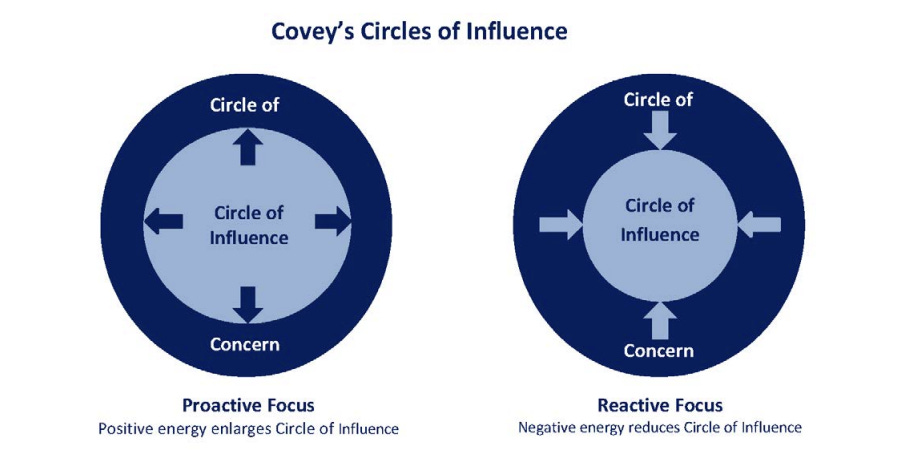
In his book, The 7 Habits of Highly Effective People (1989), Stephen Covey distinguishes between proactive people — who focus on what they can do and what they can influence — and reactive people, who focus their energy on things beyond their control.
Circle of Concern is everything that you are worried or concerned about.
For example, the economy, political events, other people’s actions, or the weather.
Circle of Influence is the things within your circle of concern that you have the power to impact, either directly or indirectly.
For example, your personal habits, how you respond to a situation, your attitude, or your effort at work.
As you can see, the more energy and focus you give to the things that are outside of your control, the more power you will give them and the less control you will have —your Circle of Influence will shrink.
But the more you focus on what you actually have control over, which is yourself and your actions, the more this circle will grow — and so will your influence and impact in life.
Long story short:
The less responsibility you take, the less control you will have over life
The more responsibility you assume, the more control you will have over life
The less responsibility you take, the more problems you will see
The more responsibility you assume, the more opportunities you will see
So do you choose to be the victim or the hero of your story?
Become the Hero of Your Story and Get the Life You Want

My self-development journey began when I took responsibility for my life and realized I needed to change to get better:
I want to be mentally strong and overcome any challenges
I want to have better confidence and self-esteem
I want to build strong relationships and connections
I want to create a fulfilling and meaningful life.
At the end of my journey, when I look back, I don’t want to see a pathetic, little b*tch who complains all the time about what he couldn’t do — I want to see a hero who was in complete control of his destiny and achieved great things.
That will be a story worth telling my children about and someone they can look up to.
How to Take Responsibility for Your Life
Now that you feel motivated to take action, let’s move on to the steps:
Acknowledge that you are the only one responsible for your life
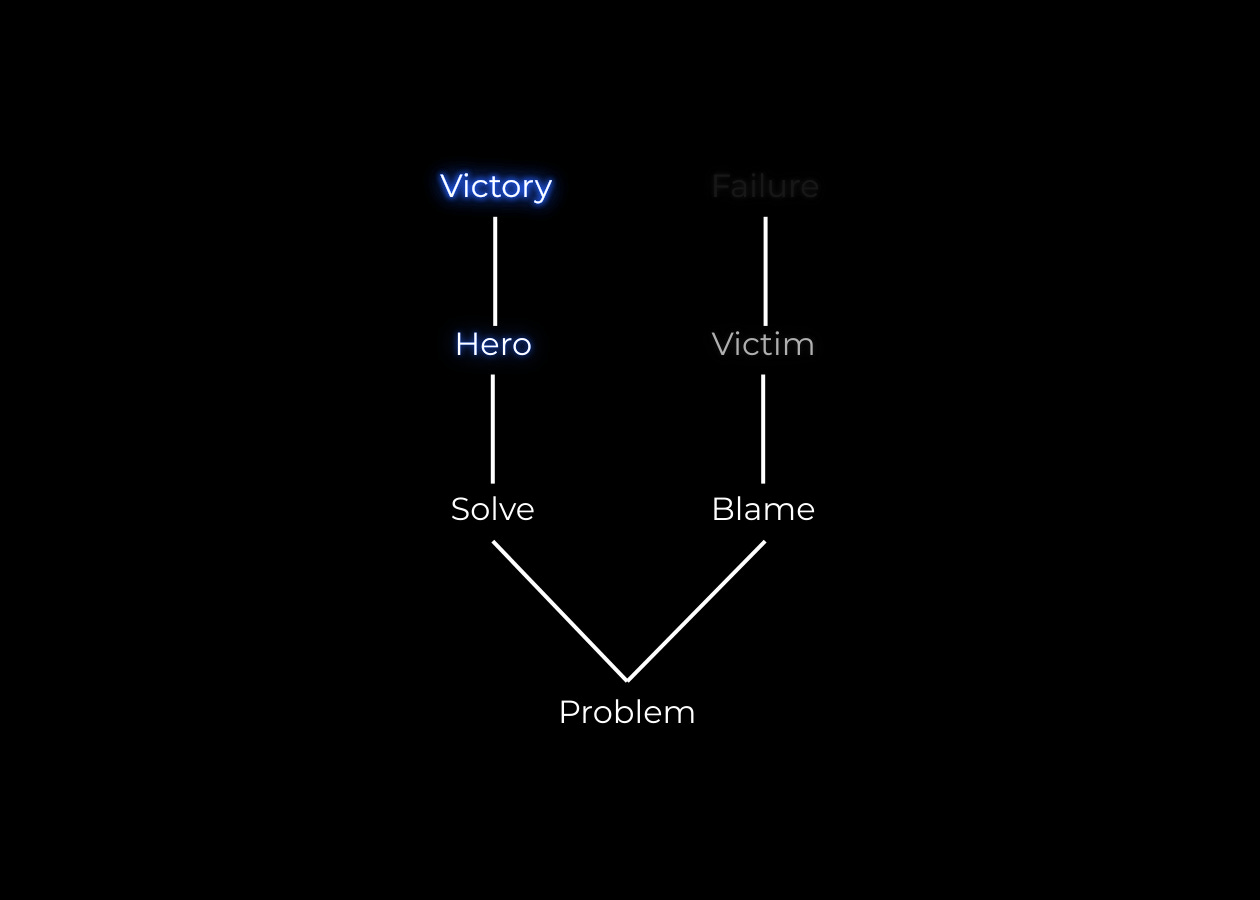
Whether you like it or not, you are the only person responsible for the outcome of your life.
While not every problem that happens in life may be your fault, it is always your responsibility to solve it and to get better.
It may not be your fault that the train arrived late, but it is your responsibility to find a way to arrive on time.
It may not be your fault that your parents are not the best role models, but it is your responsibility to read books and find mentors that you can learn from.
It may not be your fault that a girl rejected you, but it is your responsibility to reflect on the way you communicate and work on yourself.
It may not be your fault that you feel lost, but it’s up to you to find new experiences and purpose.
It may not be your fault that you have certain disadvantages or bad circumstances, but it is your responsibility to actively work on improving your mental, physical, and financial well-being, because no one else is going to do it for you.
Nobody is going to come to save you.
Everyone has their own problems to deal with.
They may be able to help from time to time.
But at the end of the day, it’s entirely up to you to decide what your life is going to be like — whether you’re going to be a victim and end up a failure, or you’re going to be the hero of your story and reap the victory.
Only YOU can dictate the outcome of your life.
“We are the only master of our fate.”
– Irelia
Accept what you can’t control and focus on what you can
Appreciate the good
Embrace the bad
Accept what you can’t control
— Kien Tran
As I mentioned above, the more you focus on what you can control, the bigger your Circle of Influence will grow and the more things you will have control over.
To do that, you have to accept what you don’t have control over so that you can shift your focus away from them.
This includes but is not limited to:
The circumstances of your birth
Genetic predispositions
Past mistakes or embarrassing moments
Wasted time
Other people’s opinions of you
Unforeseen accidents or sudden illnesses
Alternate scenarios
Whenever I catch myself thinking about any of these, I would ask myself:
“Can I do anything about it now?”
If the answer is no, that means that it is something I don’t have control over.
Even if it is something that was in my control, like my past mistakes or what I could have done differently, I would say to myself:
“What’s done is done, learn from it and do it better next time.”
Once you recognize and fully accept what you don’t have control over, you will focus on what you do have control over.
This includes, but is not limited to:
Your thoughts & beliefs
Your daily habits
Your effort & discipline
Your perception & attitude
What you learn
Who you spend time with
Notice how all of this is YOUR choices and decisions.
Focus on these to improve yourself and create the life you want.
“I am not a product of my circumstances. I am a product of my decisions.”
— Stephen R. Covey
Admit and learn from your mistakes.
Whenever you make a mistake, especially if this affects someone else,
Admit it.
Don’t make excuses.
Don’t blame anybody else.
Take full responsibility for it.
This will mold you into someone that people will trust and respect, and it’s crucial if you want to be an effective leader.
This will also build your character and resilience, which further contribute to your growth as a person.
And once you’ve admitted and recognized your mistakes, don’t stop there.
Learn from them.
Ask yourself, “What can I do better next time?”
Conclusion
To summarize how to take responsibility for your life:
Acknowledge that you are the only one responsible for your life
Accept what you can’t control and focus on what you can
Admit and learn from your mistakes.
To end this article, I’ll leave you with my favorite quote from League of Legends:
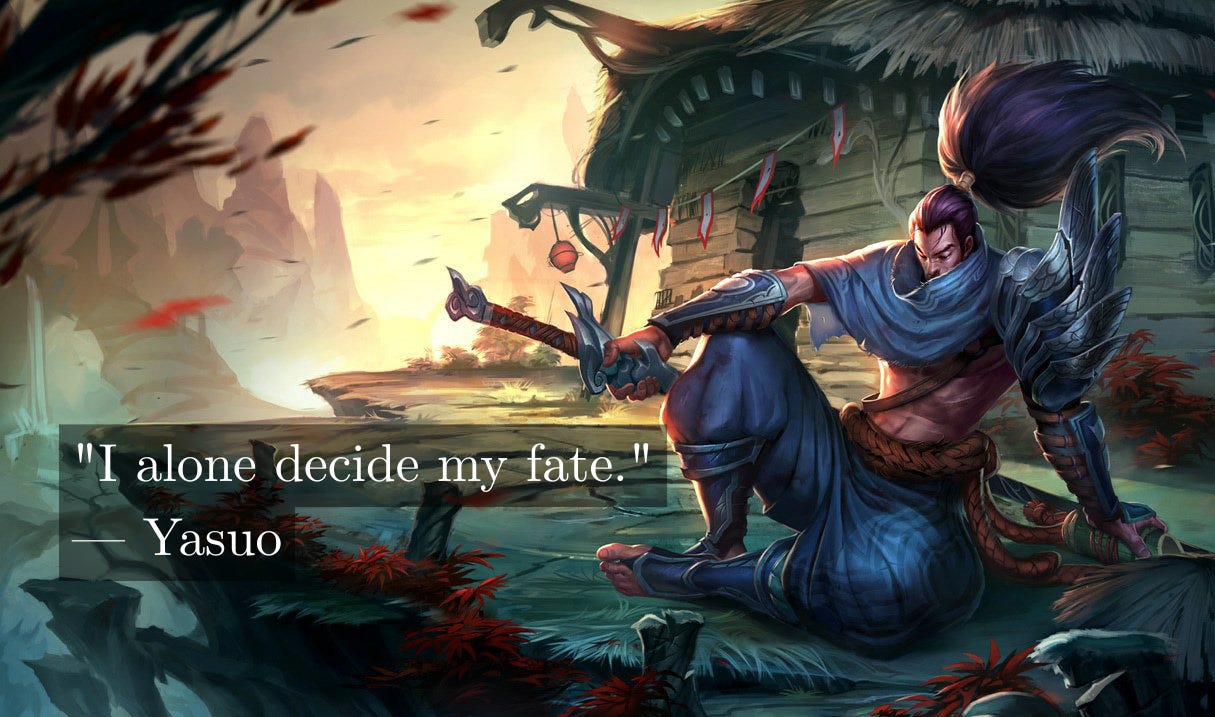
As always, thank you for reading, and see you in the next one.
— Kien
If you enjoyed this article and are serious about reaching life mastery, subscribe to my weekly newsletter.
Every issue gives you lessons and actionable guidance to level up in all areas of your life.